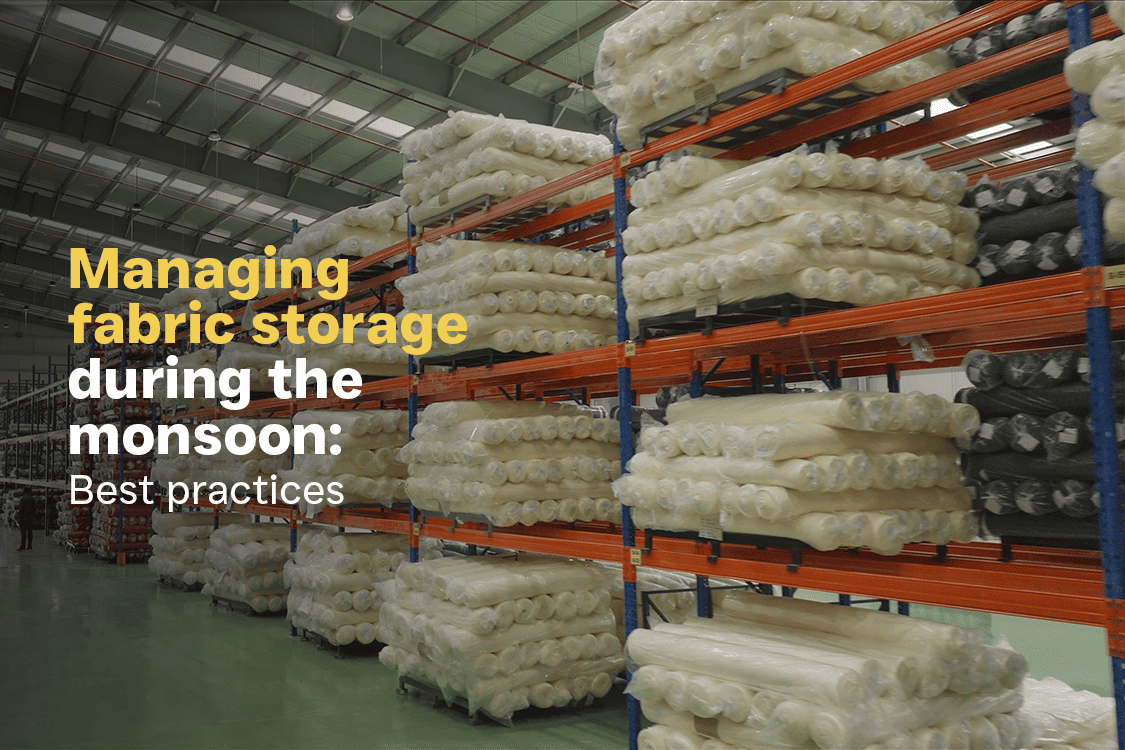
Monsoon rain not only floods streets but also wreaks havoc in warehouses. Humidity rises fast indoors. Raw rolls soak up moisture, mold grows, and fabric loses strength before cutters even open the roll. In this situation managing humidity is essential for any apparel manufacturing business handling large inventories. Businesses can keep the storage environment dry by using industrial humidifiers. This will help to prevent costly fabric damage, ensuring smooth production. This guide covers the practical steps that protect stock during monsoon season.
High humidity causes rottening of fibers quickly. Mold spores multiply once humidity crosses 60 percent. This mold stains fabric and weakens yarn. Trapped moisture causes bad odors inside rolled fabric. Damp air loosens dye molecules too, as a result of which dyes bleed and stain nearby rolls.
Cotton and linen also tend to absorb water within a fraction of a second. Hence, these fibers swell up and consequently gain weight. Pattern sizes shift as a result. Metal parts rust fast in damp air. Zippers, buttons, and racks corrode within weeks.
None of this works for US buyers. Therefore, factories must control warehouse air every single day to ensure consistent fabric quality.
Active climate control stops monsoon damage. Therefore, there is a great necessity to maintain the relative humidity between 45 and 55 percent. It is also essential to set up industrial dehumidifiers in all storage rooms. Connect these units to automatic sensors. Sensors pull moisture out fast, before levels rise too high.
Install digital thermo-hygrometers at varying heights. Warm air rises and gets collected near ceilings first. Staff should check these meters twice daily. Log every reading in a central book or spreadsheet.
Floor storage invites moisture, spills, and dirt. Raised racks solve this problem. Therefore, always try to store rolls on metal pallets or cantilever racks. Also maintain a distance of 8 inches between the bottom shelf and the floor. Also keep a distance of 18 inches between racks and outer walls. This gap lets air move freely. It also keeps wall condensation away from stock.
Stack rolls in a cross-hatched pattern. Avoid packing bays too tight. Air needs room to move around every roll. Otherwise, moisture pockets form unnoticed. Maintaining high fabric quality throughout storage ensures smooth garment production when cutting begins.
Good wrapping protects fabric during transit and storage. Wrap every roll in moisture-proof polyethylene film. Do this right after mill inspection. Seal the ends tight with industrial tape.
Add silica gel packs inside core tubes before wrapping. These packs absorb leftover moisture from paper cores. Swap or dry these packs during routine audits.
Short exposure time reduces risk. Follow FIFO rules strictly. Move older stock to cutting rooms first. Open new shipments only after older stock clears.
Assign staff to inspect high-risk zones daily. Check roll ends for damp spots and odd smells. Watch for early mold signs. Move damaged rolls to a dry room immediately. This step stops mold from spreading to other stock. Proper textile quality control protects inventory during this process.
Sustainable fabrics require higher humidity control than standard materials. Some of the sustainable fabrics are organic cotton, bamboo, recycled polyester, and Tencel.
Organic cotton does not need heavy chemical finishes. Mold attacks organic cotton fast. Keep humidity even lower in these storage bays.
Tencel and other cellulosic fibers also tend to absorb moisture fast. High humidity weakens these yarns temporarily. Store these fabrics in small, climate-controlled rooms with tight door control. Managing every phase from fabric to fashion requires strict environmental care.
Large-scale storage demands constant attention. Factories need strong building maintenance and daily routines that staff actually follow.
Classic Fashion runs modern air systems across our Jordan facilities. We use sealed logistics routes too. We process every raw material under strict quality checks. This approach helps us meet US store requirements every time. It also keeps deliveries on schedule without sacrificing quality. We seamlessly transition raw materials from fabric to fashion to support large-scale garment production.
Being garment Manufacturers in Jordan, we consider textile storage as an integral part of production, not an afterthought. Protecting fabric quality remains our top operational priority.
Run through this checklist before monsoon season starts:
If your warehouse air isn’t under control, then monsoon moisture can damage your raw fabric very fast. Keeping indoor humidity steady, lifting stock off concrete floors, wrapping rolls in heavy plastic, and running daily checks are some of the measures that can stop mold before it starts. Taking these practical steps prevents ruined inventory and stops buyers from turning down orders.
1. Why is climate control essential in a warehouse during rainy season?
Uncontrolled moisture leads to mold, distortion of fibre, bleeding of dyes, and bad odors. Dehumidifiers stabilize warehouse air and stop this damage.
2. What can be the ideal humidity level for the purpose of storing raw stock?
The ideal humidity ranges between 45 and 55 percent. Maintain a temperature between 20°C and 23°C (68°F to 73°F).
3. How does Classic Fashion protect export quality for US buyers?
Classic Fashion runs daily quality checks. We use automated air systems and sealed delivery trucks from Jordan. We follow every US import rule and brand specification.
4. How should factories store these fabrics in wet weather?
Store these fabrics in small, closely monitored, climate-controlled rooms. Natural yarns need more protection from mold than synthetic fibers.
Classic Fashion combines strong facility engineering with tight inventory control. We deliver reliable garments from Jordan for top US brands. To know more about strategies that you can adopt in current times, drop in your queries at info@classicfashion.com.