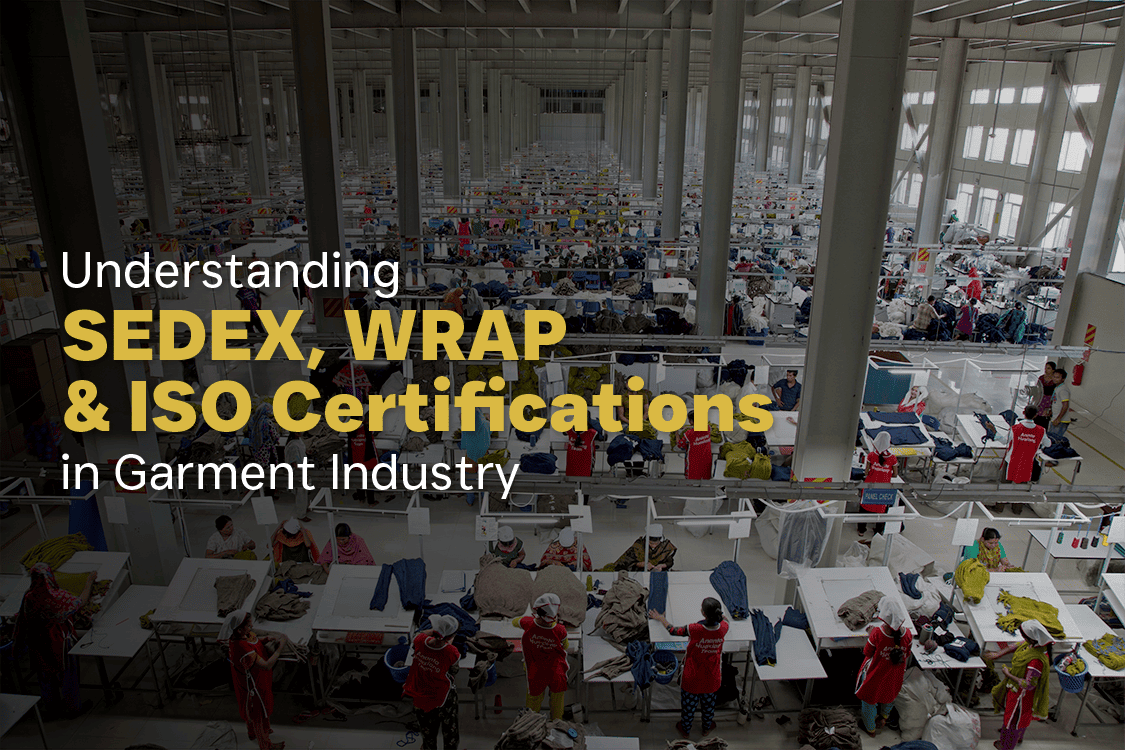
The garment industry is connected across global markets, which means manufacturers need to take care of diverse standards. From small manufacturing companies to large export houses, clothing brands depend heavily on supply chains which span entire continents. With such huge networks of operation, maintaining ethical production, the safety of workers, and consistent quality of products becomes crucial. This is where international SEDEX, WRAP and ISO Certifications in the garment industry come in.
These are certifications which help manufacturers meet global compliance standards as well as make them more reliable to customers around the world. Let us find out what each of these certifications entails and how they can impact the business of garment companies.
SEDEX is an acronym for Supplier Ethical Data Exchange. It is not a certification for garments in the strict sense, but rather a platform to help companies share and manage information on responsible practices in the supply chain.
SEDEX provides services and tools which companies use to ensure ethical sourcing. For this, they evaluate conditions under which workers produce garments, health and safety, environmental impact and business ethics throughout the supply chain. The most common audit that is related to SEDEX is the SMETA (Sedex Members Ethical Trade Audit).
The garment manufacturers and exporters who have a SEDEX membership prove to the market that they are committed to ethical sourcing and responsible commerce. Many international brands in the garment industry prefer working with SEDEX-certified garment manufacturers. A SEDEX membership ensures:
WRAP stands for Worldwide Responsible Accredited Production. It is a certification program focusing on the apparel, footwear and sewn products industries. Unlike SEDEX, which is essentially a data platform, WRAP is a compliance-based audit and certification program. It focuses on operations in garment manufacturing factories.
12 core principles determine whether or not an apparel manufacturing business can be WRAP certified, which ensure lawful, humane and ethical manufacturing. Some of the key principles are:
Apparel manufacturing factories which apply for WRAP certification have to undergo a detailed audit by accredited monitors. Depending on the results and their level of compliance, they may receive either of these certificates –
WRAP certification is important for garment manufacturers as it presents strong proof of responsible manufacturing. It is recognised globally and accepted by big brands and retailers.
The principal benefits of this certification are:
ISO (International Organisation for Standardisation) certifications are probably the most widely known standards across all industries, including garments. ISO certifications in the garment industry ensure proper management systems, responsibility towards the environment and safety processes at a more technical and organisational level.
Some of the most common ISO certifications for the garment industry are –
1. ISO 9001: Quality management system
It ensures that a factory maintains consistent product quality and improves the satisfaction of customers while regularly improving operations.
2. ISO 14001: Environmental management system
It covers sustainable practices, efficient use of resources and reduction of the negative impact of manufacturing on the environment.
3. ISO 45001: Occupational health and safety management system
It promotes the well-being of workers and helps to bring down risks and accidents at the workplace.
ISO certifications are not just markers of compliance for the garment manufacturing industry. They also reflect the level of dedication of garment companies towards systematic management and sustained improvement.
The key benefits of ISO certifications in the garment industry for manufacturers are –
In today’s internet-dominated, hyperaware world, consumers care deeply about the quality and environmental impact of their purchases, including garments. Certifications like SEDEX, WRAP and ISO have become crucial, not optional, for garment manufacturers to stay reliable in the market in the long run.
These certifications also help to address major global challenges of the moment –
The garment manufacturing industry in the current world goes way beyond fashion trends and regular production. Manufacturers need to ensure responsibility, transparency and consistent quality in their operations, for which several certifications have been put in place.
SEDEX, WRAP, and ISO certifications play a great role in ensuring that garment factories are working ethically, sustainably and securely. For manufacturers, these certifications mean not just compliance with regulations but also the key to creating a better reputation in the market. They also ensure easy entry into global markets and the ability to create trust among consumers in the long run.
1. What is the difference between SEDEX and WRAP certification?
SEDEX is a data platform which helps companies to share and track ethical practices across the supply chain. On the other hand, WRAP is a certification based on factory audits, which confirm ethical and lawful manufacturing. SEDEX encourages transparency, while WRAP ensures direct compliance with auditing.
2. Are SEDEX, WRAP and ISO certifications mandatory for garment producers?
No, these certifications are not legally mandatory. But they are strongly recommended as they can increase trust, open global market opportunities, and show the manufacturer’s commitment towards ethical and sustainable manufacturing. Many international buyers prefer certified suppliers.
3. How long does it take to get WRAP certification?
The time varies based on the readiness of the factory and the level of compliance. Usually, the process from applying to completing audits and corrective actions can take anywhere between two to six months, depending on the scale of operations and findings from the audit.